
Curious about sedation dentistry? Winston-Salem dentist Dr. Blake Nelson answers common questions about IV sedation, dental anxiety, comfort, and patient safety.
For some people, visiting the dentist feels like just another appointment. For others, even thinking about sitting in the dental chair brings on anxiety. Maybe you had a painful experience years ago, worry about feeling discomfort, or simply feel overwhelmed by the idea of extensive dental work. You're not alone, and dental anxiety doesn't have to keep you from getting the care you need.
Dr. Blake Nelson understands these concerns firsthand. His own childhood dental experiences helped shape his approach to patient care and inspired his interest in sedation dentistry. We sat down with Dr. Nelson to discuss his experiences, the different types of dental sedation, and what patients can expect when they choose a more relaxed approach to dental treatment.
Q: How Did Your Childhood Dental Experiences Lead You to Focus on Sedation Dentistry?
That personal experience gives Dr. Nelson a valuable perspective on dental anxiety. He understands that fear doesn't always come from the unknown. Sometimes, it comes from remembering exactly how an uncomfortable dental appointment felt.
Today, that understanding influences how he approaches patients who feel nervous about treatment. Sedation dentistry offers another option for people who want to address their dental needs but struggle with anxiety or memories of previous experiences.
Q: What Training Does IV Sedation Require, and Why Choose a General Dentist Who Offers It?
Dr. Nelson is among a relatively small group of general dentists in North Carolina licensed to provide IV sedation. His additional residency training allows him to offer moderate IV sedation alongside general dental services.
One of the biggest advantages is that patients may be able to complete several procedures during a single appointment. As Dr. Nelson explains, specialists who routinely provide IV sedation, such as oral surgeons and periodontists, generally don't perform restorative procedures like fillings and crowns. Having access to IV sedation through your general dentist can simplify treatment planning, particularly when you need multiple restorative procedures.
Q: What's the Difference Between Nitrous Oxide, Oral Sedation, and IV Sedation?
Not all dental sedation works the same way. Dr. Nelson explains the three options and how they differ.
Nitrous Oxide: Mild Relaxation
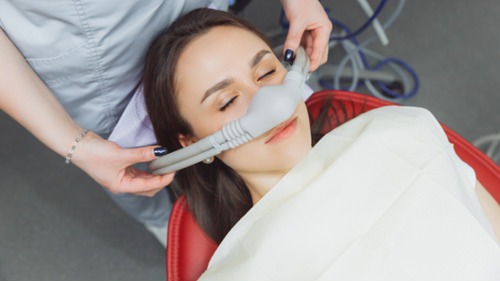
Often called "laughing gas," nitrous oxide is inhaled through a small mask placed over your nose. It helps reduce anxiety while allowing you to remain awake and responsive.
What to expect:
- You remain conscious and generally remember your appointment.
- The calming effects wear off relatively quickly.
- Most patients can drive themselves home after recovering and receiving clearance from their dentist.
Oral Sedation: A More Relaxed Experience
Oral sedation involves taking prescribed medication to reduce anxiety before dental treatment. Patients typically feel calmer and may become drowsy, although they remain responsive.
What to expect:
- You feel more relaxed during treatment.
- You may remember parts of your appointment.
- You need a responsible adult to drive you home.
IV Sedation: Deeper Relaxation for Extensive Dental Work
IV sedation delivers medication through a vein, allowing the dental team to adjust the level of sedation throughout treatment. Dr. Nelson explains that moderate IV sedation provides a predictable level of relaxation and often results in little or no memory of the procedure. For suitable patients, it can also allow approximately three to four hours of dental work during one visit.
What to expect:
- You remain responsive rather than completely unconscious.
- You may have limited or no memory of treatment.
- You need someone to accompany you home and follow post-sedation instructions.
- Your medical history, treatment needs, and individual circumstances help determine the most appropriate option.
Q: What's the Biggest Misconception About Sedation Dentistry?
It's a common concern. Patients sometimes assume that staying conscious means experiencing and remembering everything happening around them.
However, moderate IV sedation can significantly reduce awareness and memory formation during dental treatment. Unlike general anesthesia, moderate sedation doesn't require patients to become completely unconscious.
Dr. Nelson also points to the potential safety and cost advantages of avoiding general anesthesia when moderate sedation is clinically appropriate. It's important to understand that individual responses vary, and no sedation technique guarantees complete memory loss.
Q: What Safety Measures Are in Place During IV Sedation?
Patient safety plays a central role in every sedation appointment. Dr. Nelson explains that three team members remain in the treatment room during IV sedation, with one person dedicated exclusively to monitoring the patient's vital signs.
Our dental practice also uses hospital-grade monitoring equipment to track patients throughout the procedure. Beyond monitoring, the team trains for medical emergencies and maintains emergency medications and equipment.
Before treatment, patients undergo an assessment of their medical history, medications, and overall suitability for sedation. They also receive instructions about eating, drinking, transportation, and recovery.
Although moderate IV sedation has an established safety record when administered by appropriately trained professionals, it carries risks like any medical procedure. Careful patient selection, preparation, and monitoring help manage those risks.
Q: What Would You Tell Someone Who Has Avoided the Dentist for Years?
Dr. Nelson encourages nervous patients to start by reading the practice's Google reviews and learning about other patients' experiences. His team provides sedation dentistry regularly, helping patients who need treatment but feel anxious about undergoing dental procedures.
For some patients, sedation makes it more manageable to address several dental concerns during one appointment. Most importantly, you don't need to feel embarrassed about avoiding the dentist. A consultation gives you an opportunity to discuss your concerns, ask questions, and explore your options without committing to treatment that day.
Call Us for Comfortable Dental Care in Winston-Salem
Dental anxiety is real, and your concerns deserve to be heard. With personal experience, additional IV sedation training, and a focus on patient comfort, Dr. Blake Nelson helps patients explore ways to receive the dental care they need.
From nitrous oxide and oral sedation to moderate IV sedation, his team can explain the available options and help determine which approach suits your needs.
Ready to talk about sedation dentistry in Winston-Salem? Contact Dr. Nelson's dental office to schedule a consultation and learn more about your options.